You signed up for the same camp your neighbor's kids love. Great reviews, good location, reasonable price. Then week two hits, and pickup becomes a different experience. Your child is quiet in the car. Or the opposite: wound up and hard to settle for the rest of the evening. When you ask about the day, you get a shrug instead of a story.
This is one of the more common patterns behind childhood struggles at a traditional summer camp, and it rarely means something is wrong with the child. It usually means the program and the kid are not built for each other. Here is how to spot the signs early, understand what they're telling you, and figure out whether a specialty day camp solves the actual problem.
What a Traditional Summer Camp Assumes About Your Child
A traditional summer camp is built around variety. Swimming block, then field games, then arts and crafts, then a different activity after lunch, all set on a schedule the counselors control rather than one the camper chooses. For kids who like moving between things and haven't landed on a particular interest yet, that structure works well. It gives them exposure to a lot of activities without asking them to commit to any single one.
The model assumes something specific about a child, though: that shifting gears every 45 to 60 minutes, all day, across a group of kids they may not know well, is manageable and even energizing. For a lot of children it is. For others, that constant transition is where the summer camp challenges start. The child who needs more time to settle into something, or who does better with fewer variables to track at once, can spend the whole day feeling slightly behind the pace of the group.
Seven Signs Your Child Is Facing Camp Adjustment Issues
Some camp adjustment issues show up in the first week. Others take longer to surface. Watch for these patterns:
- Sunday night dread that doesn't fade after week one. A little nervousness before day one is normal. Ongoing resistance three or four weeks in is a signal worth taking seriously.
- Exhaustion that looks more like depletion than tiredness. Physically tired from a good day looks different from the flat, wrung-out quality that shows up after a day of constant transitions.
- No stories about the day. Kids who are engaged usually want to tell you something, even something small. A pattern of "nothing happened" or "it was fine" can mean the day didn't give them anything to hold onto.
- Complaints about specific transitions rather than specific activities. If your child likes swimming and likes arts and crafts but dreads the camp itself, the switching between activities is usually the harder part, more than the activities themselves.
- Regression in behaviors you thought were settled. Sleep issues, appetite changes, or more meltdowns at home than usual can be a downstream effect of a day that's asking more of your child than it's giving back.
- A sense of being lost in the group. If your child can't name their counselor by week two, or describe what makes them different from the other 20 kids in their group, the ratio and structure may not be built for individual attention.
- No sense of building toward anything. Kids who leave camp each day without something to point to, a project, a new skill, a specific thing they got better at, often disengage over the course of a summer even if no single day goes badly.
None of these on their own is a red flag. A cluster of them, especially several weeks in, usually means the fit is off.
How Child Temperament Shapes These Camp Adjustment Signs
It's tempting to read these signs as a child having a hard time adjusting, full stop. Pediatric guidance on child development from the American Academy of Pediatrics describes how children vary widely in traits like adaptability, activity level, and how they respond to new situations and transitions, and how a poor match between a child's temperament and their environment, sometimes called a "fit" problem, can produce exactly the pattern described above.
That reframe matters for parents. A high-rotation, high-stimulation day can overwhelm a child whose temperament needs more time to settle into something new. The mismatch usually sits between a child's temperament and the camp's structure. The American Camp Association draws a similar distinction between traditional camps and specialty camps, noting that understanding what each format is built to deliver helps families match a child to the right environment instead of assuming one camp model fits every kid.
How a Specialty Day Camp Changes the Structure of the Day
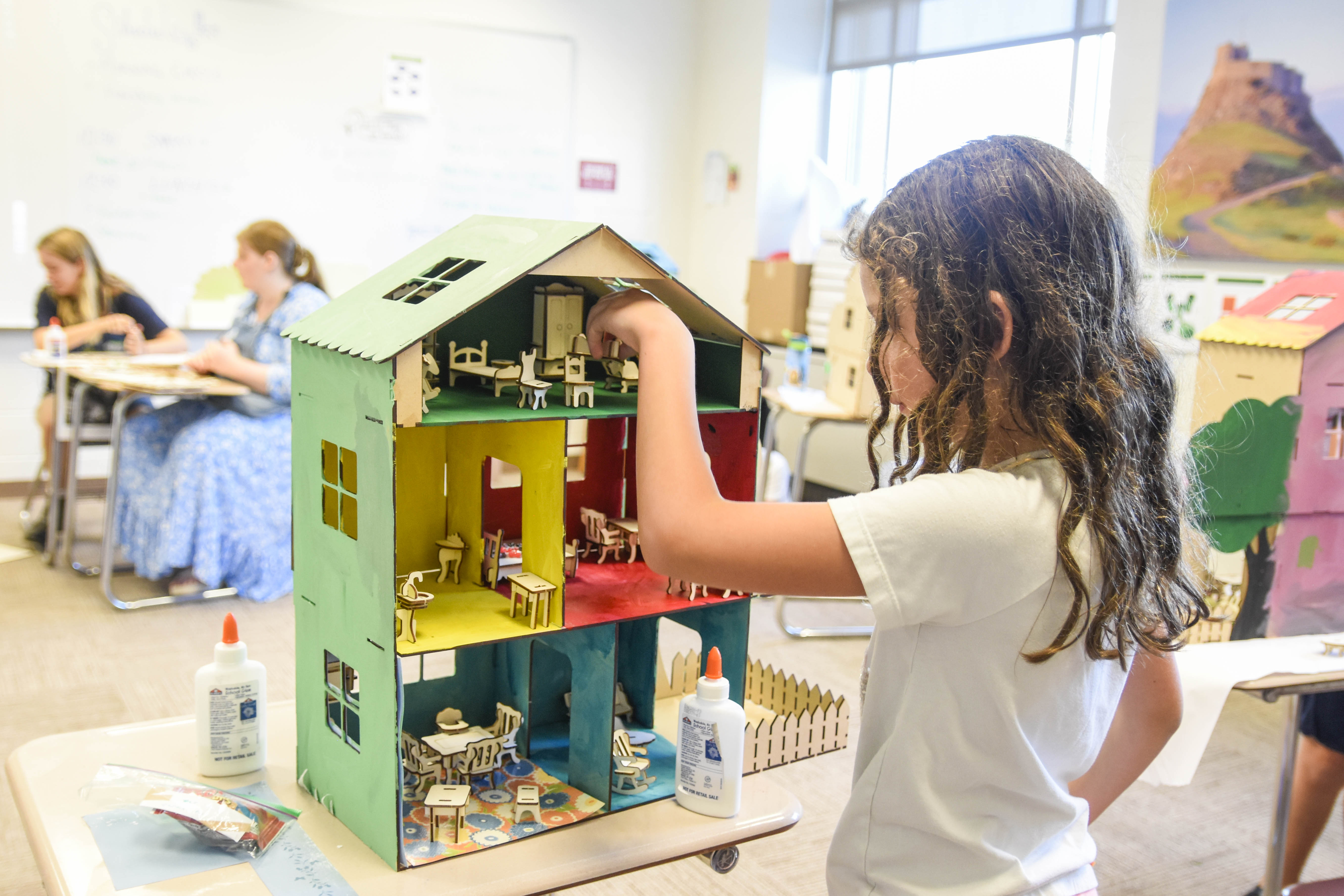
A specialty camp organizes the day around a focused area, or a menu of related programs a camper chooses and sticks with. Instead of eight short activity blocks, a child might spend the week going deep on one or two programs: building a woodworking project from raw materials, working through a multi-day Innovation Lab challenge, or developing a dish in a culinary session from prep to plate.
That structure solves several of the problems above at once:
- Fewer transitions per day means fewer moments where a child has to reorient and catch up.
- Sustained focus on one thing gives kids something concrete to talk about, and something to show for the week.
- A child who isn't the strongest at every activity gets a meaningful shot at becoming skilled in one area, which is usually where confidence takes hold.
- Smaller, more consistent groupings across the week make it easier for a child to know their counselor and peers instead of cycling through a rotating cast.
If you're still weighing the two formats side by side, our post on specialty camp versus day camp breaks down the tradeoffs of each in more detail.
How to Evaluate Alternative Summer Programs for Your Child
Not every program that calls itself a specialty camp delivers on the structure that actually helps. Before switching formats, look for:
- A counselor ratio tight enough for individual attention, one that holds steady during meals and transitions, not just during scheduled activities.
- Programs meaningfully differentiated by age, so a project designed for a six-year-old isn't the same one handed to a twelve-year-old with a shorter time limit.
- Staff trained to notice a hard day early, rather than staff trained only to supervise an activity.
- A clear answer for what happens when something isn't working, whether that means adjusting a child's schedule mid-summer or addressing a concern directly with a parent.
Our checklist for finding the right camp for young children walks through these questions in more depth, and DEAN's program structure shows how age-tiered specialty programming works in practice from Pre-K through the DEAN Fellowship.
Finding the Program That Matches How Your Child Learns Best
DEAN Adventure Camps was built around the idea that a summer should be shaped, not just filled. With 30-plus hands-on specialty programs spanning Woodworking, Culinary Arts, Machine Sewing, Robotics, and Innovation Lab, campers pick the areas that interest them and go deep rather than skimming across a dozen short activities. The day runs from 7:30 AM to 5:30 PM at both the Haverford and Lawrenceville locations, with all meals and materials included, so there's less for parents to manage on top of an already full summer.
At a 1:7 counselor-to-camper ratio, every Lead Counselor knows your child's name and notices when a day isn't going well, before it becomes a pattern. That's the camp that notices, and it's the difference between a program that manages the day and one that shapes it around the kids in front of them.
If your child has been showing signs of struggle at a traditional program, a different structure might solve it. DEAN's happiness guarantee means that if the fit still isn't right, the team will work with you to fix it or refund tuition. Because DEAN's programming grows with campers from Pre-K through rising 12th grade, the right fit this summer can become the foundation for several summers to come.