
 1 WEEK SESSIONS
 GRADES: RISING 1ST-7TH

SKILLS & TECHNIQUES
Each week, campers engage in design and fabrication projects, learning key skills and mindsets. The specific skills taught vary by program, giving each camper the chance to explore different aspects of design and style:
- Foundation Skills: Creativity when experimenting with materials and design concepts, collaboration as they share feedback and inspiration, and responsibility as they handle tools, fabrics, and multimedia materials. They also develop resilience as they refine their work through experimentation and iteration, learning that great design often comes from trying, adjusting, and trying again.
- Technical Abilities: Fashion illustration, mood boarding, draping, pinning, embroidery, pom-pom making, weaving, textile design, needle felting, jewelry construction, while handling tools, fabrics, and multimedia materials with responsibility
As they design and create, campers also strengthen essential character skills:
- Collaboration: Sharing feedback and inspiration with fellow designers
- Resilience and Self-Regulation: Refining their work through experimentation and iteration, discovering that great design often comes from trying, adjusting, and trying again
By the end of the week, every camper leaves with finished products they can proudly wear, display, or share, along with a growing portfolio of creative techniques and the confidence to express their individual styles in new and imaginative ways.
 GENERAL DAILY SCHEDULE


HOURS


JEWELRY MAKING
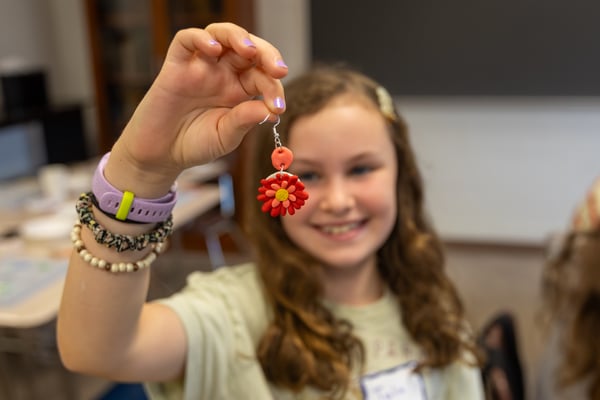
Earrings that catch the eye of onlookers. A handmade bracelet gifted to your best friend. A ring ready to wear to the party. Campers become jewelry designers, launching their collection, and every piece starts with a tool in hand and counselors ready to teach and support: bending and coiling wire with pliers, stamping a message into metal, and casting a charm in clay. Along the way, they sketch ideas, plan each step, and work through challenges.
At the end-of-week camper showcase, each designer proudly displays their pieces for the “oohs” and “aahs,” then takes the work home to wear, display, or give to others. Behind every piece is practice in patience and problem-solving: reshaping a wire bend until it sits right, re-tying a knot until it holds, and working out why a clasp will not close. Those habits carry into math problems, long assignments, and any project that does not work out the first time.
Explorers (rising grades 1-2) work with counselors close by to demonstrate and support each step. They learn about different tools and materials, building fine motor skills and hand-eye coordination by practicing how to properly and safely use age-appropriate tools and equipment.
Achievers (rising grades 3-4) work with counselors, who demonstrate each step and support campers along the way. Campers watch, then do it themselves. With supervision, they move up to more advanced equipment to stamp metal, cast pendants, and sculpt charms. Practicing the safe, correct use of age-appropriate tools builds fine motor skills and hand-eye coordination.
Navigators (rising grades 5-7) work more independently, but still with counselor instruction and support. They read instructions, gather their own materials, and take on intricate wire bending, metal stamping, casting, and clay work. Like professional jewelers, they build a brand around their jewelry collection.
FIBER ARTS
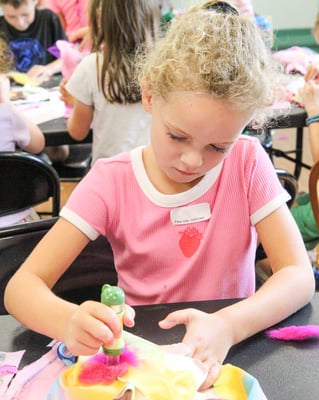
Fluffy wool roving, ready to be felted. Colorful yarn, waiting to be looped and woven. Campers become fiber artists, and every project begins with yarn, fabric, or thread in hand: sketch a design, knit a row, stitch an embroidered detail, shape a creature from wool, and sew it all together. The lineup changes every week, so returning campers always find something new to make. Counselors demonstrate each step, set out the materials, and stay close at every station so campers learn needles and tools safely.
At the end-of-week camper showcase, each artist lays out their collection, explains how they made each piece, and takes the work home to wear, use, or even give as a gift. This hands-on DEAN Design & Style Camp program teaches the knitting, embroidery, felting, and sewing behind handmade clothing, home decor, and stuffed toys. Following a pattern, fixing a mistake in the row, and careful work build the focus and follow-through that carry into reading directions, finishing homework, and mending a favorite shirt that now can be reused, all through making fun handmade pieces.
Explorers (rising grades 1-2) work with counselors close by to demonstrate and support each step. No experience is necessary, and skills keep building, so campers can return week after week and summer after summer to take on something new. They learn about different tools and materials, building fine motor skills and hand-eye coordination by practicing how to use real tools and equipment safely and properly, such as sewing needles, pom-pom makers, and needle felters.
Achievers (rising grades 3-4) work more independently, with counselors demonstrating techniques and supporting along the way. No experience is necessary, and skills keep building, so campers can return week after week and summer after summer to take on something new. They use the real tools of fiber arts, like sewing needles, embroidery hoops, needle felters, and wonder knitters.
FIBERS & FABRIC: KNIT, CROCHET, EMBROIDERY
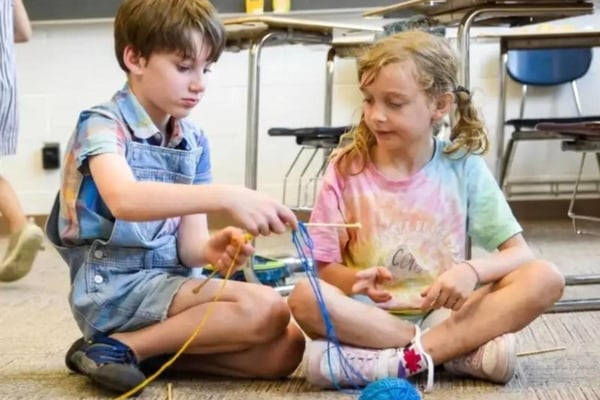
Skeins of yarn fill the baskets. Crochet hooks and knitting needles wait beside them, ready for the first loop. Embroidery hoops stretched with fabric, waiting for the first stitch. Campers become fiber artists learning to knit, crochet, and embroider. First-timers start with the very first loop, and returning campers take on new techniques and design challenges, so every week and every summer brings something new.
At the end-of-week camper showcase, fiber artists exhibit their finished pieces, then take their work home to keep, use, gift, or display. Behind every stitch and loop, Fibers & Fabric: Knit, Crochet, Embroidery builds patience and attention to detail that carry into following multi-step directions, finishing long assignments, and mending a favorite hoodie to give it a second life.
Navigators (rising grades 5-7) work with the most independence, with counselors close by for guidance and support. They choose their projects, sketch their own designs, and work at their own pace, building from the basics to finished projects. Navigators use tools such as embroidery needles, crochet hooks, knitting needles, embroidery hoops, and various types of fabric and yarns.
GLAMORIZE YOUR DOLL
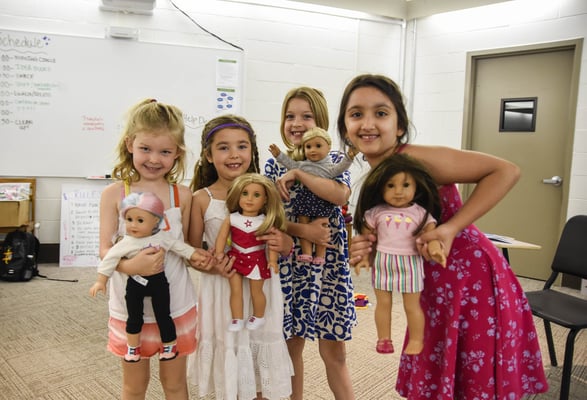
It’s party time, and the guest of honor is your doll, now dressed to impress. A swishing gown, a sparkly new bracelet, and a fashionable new bag. Every look was imagined, made, and fitted by the camper-turned-designer. Designers sketch ideas, measure, trace patterns, pin, and then hand-sew, embroider, and needle-felt their clothes and accessories. Campers may also take a first turn at the sewing machine with an instructor at the machine. Counselors teach each stitch and stay close for safe use.
At the end-of-week camper showcase, designers present the full look, and the tiny models go home dressed in their handmade originals. Bring only an 18” doll, and every other material is included.
This hands-on DEAN Design & Style Camp program teaches the sketching, hand sewing, and pattern making behind fashion design through a complete wardrobe, from first idea to final hem. Measuring twice, redoing a crooked seam, and keeping stitches small and even build the patience and attention to detail that carry into multi-step directions, long assignments, and sewing a button back on a favorite shirt.
Explorers (rising grades 1-2) & Achievers (rising grades 3-4) share the room and work together while counselors teach each step. Designers hand-sew new outfits, stitch a sketched embroidery design, add pom-poms and embellishments, and finish at least one complete piece.
First-timers start with the basics of hand sewing, embroidery, and embellishing, and build on those skills. Returning campers take on harder techniques and bigger design challenges, so the doll’s wardrobe and accessories keep growing summer after summer. Along the way, campers build fine motor skills, hand-eye coordination, and attention to detail.

Passport to YUM


the world of sweet imagination

is it cake?
DEAN Camps - Premium summer day camps serving Haverford PA (Main Line/Philadelphia area) and Lawrenceville NJ (greater Princeton). Specialty programs for ages 4-16 include woodworking, machine sewing, culinary arts, STEAM, performing arts, design & style, writing & illustration, sports & games, and Trailblazers, plus CIT leadership development. Full-day care with breakfast, lunch, and snacks included. Serving families from Bryn Mawr, Ardmore, Radnor, Princeton, Hopewell, and surrounding communities since 2001. Call 610-660-9600.