Parents researching summer camp for children usually start with the same question, whether a given program actually fits their child's age. Camp websites answer with grade ranges. What often goes unexplained is what changes for a child between age five and age twelve, and why a program built for a kindergartner falls flat for a fifth grader even when both technically fit inside the same elementary school label.
Age grouping in camp tracks how a child's abilities change, from what they can plan and build to how much ownership they can take, from one stage to the next. Understanding that progression helps a family judge whether a camp will meet a child where they are this summer, and where they'll likely be next summer too.
Camp Age Requirements and the Skill Growth Behind Them
A four-year-old and an eleven-year-old need fundamentally different days. The younger child is still building the basics of attention and turn-taking. The older one is managing multi-step projects, negotiating group dynamics, and starting to mentor kids younger than themselves. Camp age requirements exist because the daily structure, activity length, and level of independence built into a program have to match where a child is developmentally.
DEAN Adventure Camps organizes around this directly, with four grade-based tiers spanning Pre-K through 8th grade: Discoverers, Explorers, Achievers, and Navigators. Each tier is built around a distinct developmental stage, with activities that grow in depth and independence as campers move up rather than repeating the same format at a different pace.
Pre-K and Kindergarten, Building Attention and Turn-Taking
At four and five years old, children are developing foundation skills. That includes sustained attention, rule-following, and comfort away from a parent for a full day. The CDC's developmental milestones for five-year-olds show that children this age can typically pay attention for five to ten minutes during an activity and can follow rules or take turns when playing games with other children. That window is short, and it shapes everything about how a strong program for this age should run.
A well-matched camp for this stage rotates activities frequently, uses sensory-rich stations over long lectures, and keeps group sizes small enough that a counselor can redirect a wandering four-year-old without losing the rest of the group. DEAN's Discoverers program is built around exactly that rhythm, with counselors trained to work within short attention spans rather than fight them.
This is also the age where the emotional experience of the first day counts as much as the activities themselves. A child who leaves day one excited to return is a child whose camp understood the developmental stage of a five-year-old.
First and Second Grade, Following Group Instructions and Cooperative Play
Between kindergarten and second grade, children start managing multi-step directions and back-and-forth cooperation with peers. They can hold a short sequence of instructions in mind, negotiate a shared game, and start a small project with a beginning and an end.
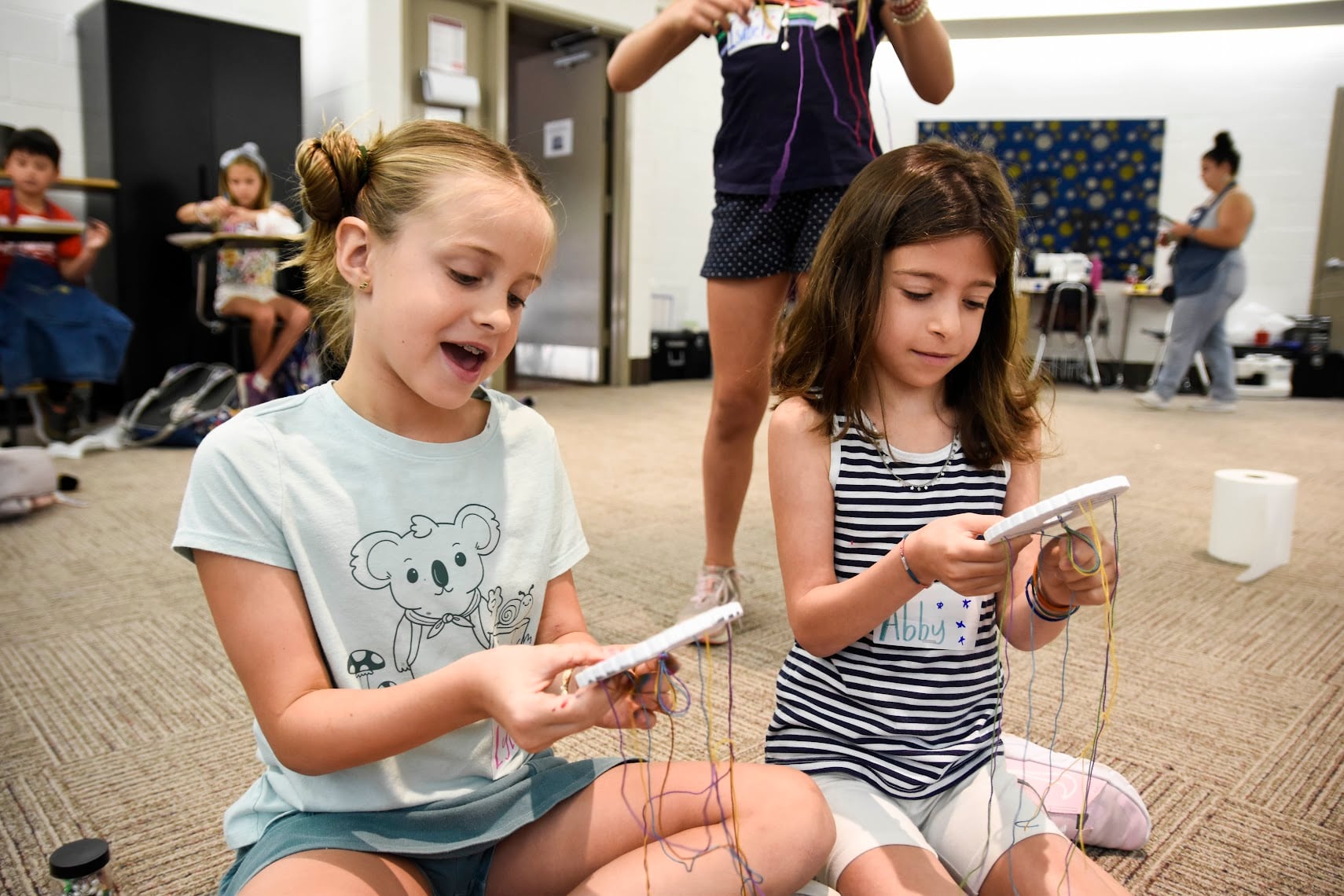
This is the stage where the kids summer activities on a camp schedule start to make a measurable difference. A first or second grader can follow a three-step craft process, take a basic turn in a team relay, or complete a simple recipe with guidance. The activities still need structure and close supervision, but the ceiling for what a child can accomplish independently grows noticeably from the Pre-K stage.
Third and Fourth Grade, Taking On Project Ownership
By third and fourth grade, children can plan ahead, revise a plan mid-project, and work toward a result they care about finishing. This is where specialty programs like Woodworking, Culinary Arts, and Machine Sewing start to click in a different way. A camper at this stage doesn't just follow a demonstration. They start making choices about their own project, troubleshooting when something doesn't work, and taking pride in a finished piece they built themselves.
Peer collaboration also gets more complex here. Kids this age can divide tasks within a small group, give each other feedback, and work through minor disagreements without an adult stepping in every time. A camp that still runs third and fourth graders through the exact same station rotation as its Pre-K group leaves growth on the table.
Fifth Through Eighth Grade, Growing Independence and Leadership
The jump from elementary-age camper to middle schooler is significant, and it starts earlier than many parents expect. Child Mind Institute's guidance on tweens describes ages eight through twelve as a period of major cognitive and social change, where kids move from a self-focused view of the world toward stronger awareness of peers and a stronger pull toward independence.
Camp programming for this age group needs room for that change. Fifth through eighth graders want ownership over their choices, meaningful skill-building rather than novelty activities, and opportunities to take on responsibility instead of just following along. DEAN's Navigators program reflects this with specialty depth in areas like Robotics, Innovation Lab, and Velocity, plus proximity to the DEAN Fellowship, where older teens mentor younger campers. That mentorship structure counts at this stage specifically, because tweens respond to older peers in a way that adult instruction alone doesn't always reach.
What Changes at Each Tier Transition
Looking across the full Pre-K to 8th grade range, a few shifts show up consistently at each transition point:
- Pre-K to Explorers. Attention span stretches from a few minutes to a sustained activity block, and following multi-step directions becomes reliable.
- Explorers to Achievers. Cooperative play becomes structured project collaboration, with kids dividing tasks and giving each other feedback.
- Achievers to Navigators. Activity engagement moves from following a demonstration to owning a project start to finish, including troubleshooting.
- Within Navigators. Independence expands further, with campers taking on leadership roles and mentoring younger kids through the Fellowship pipeline.
A camp built around one of these stages, but stretched loosely across all of them, tends to underserve the oldest and youngest campers at the same time.
What Stays Consistent No Matter the Age
Age changes what a child can do. It shouldn't change how closely they're supervised or how well they're known. At DEAN, a few things hold steady across every tier:
- A 1:7 counselor-to-camper ratio at every age, with Lead Counselors certified in First Aid and CPR
- Full-day coverage from 7:30 AM to 5:30 PM at one flat rate, built for families comparing childcare programs against a full workday
- Hot breakfast, full lunch, and multiple daily snacks included for every camper
- All materials and supplies covered, regardless of the specialty program
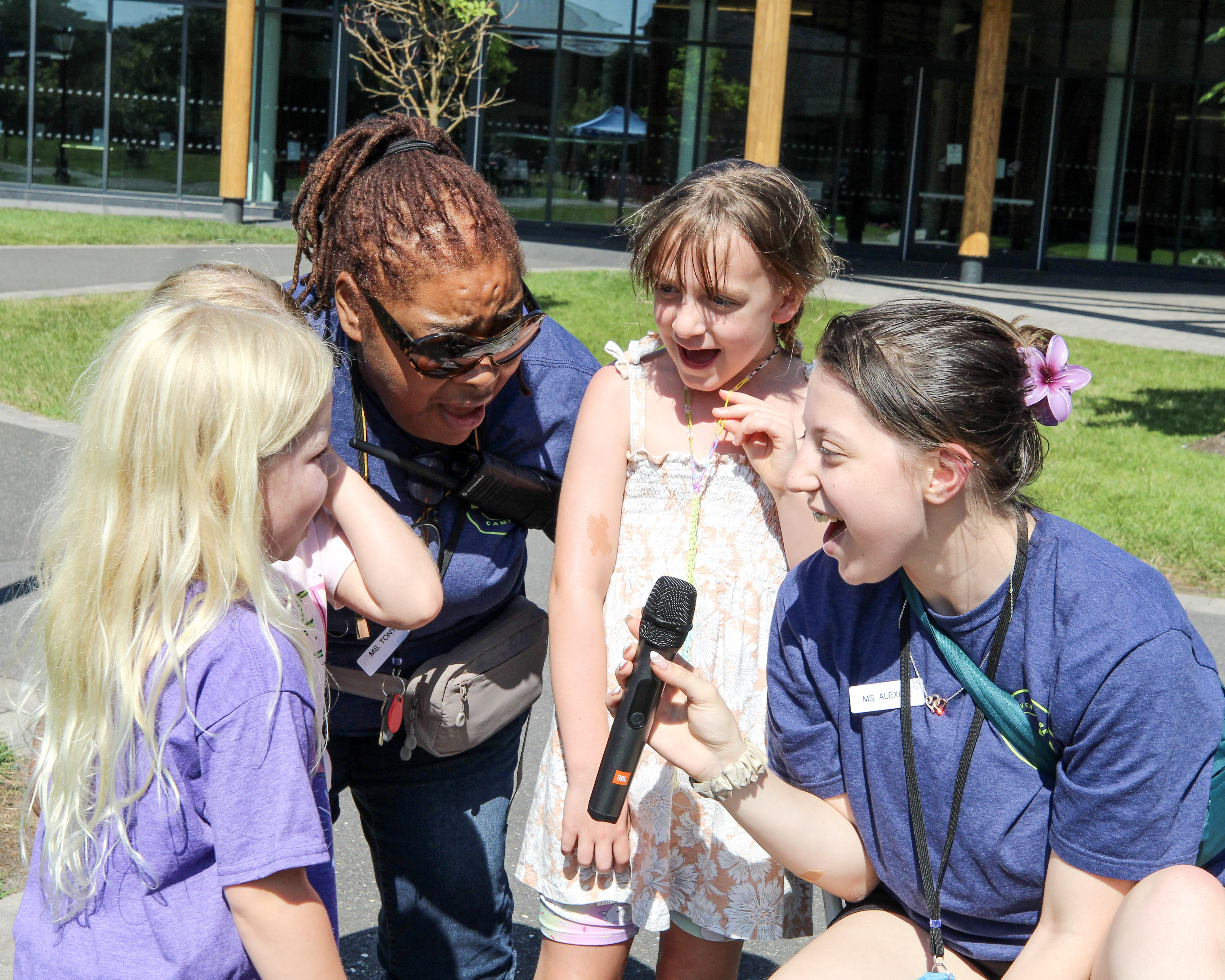
Every counselor knows your child's name, whether that child is four or thirteen, and that consistency is what makes DEAN work as a dependable childcare program across the full range of ages it serves. It's also what makes it possible to compare a Discoverers day and a Navigators day and still recognize the same camp underneath.
Finding a Camp That Grows With Your Child
Evaluating summer camp for children means looking past whether a child fits an age bracket. The program should change as the child does, year over year, tracking developmental growth instead of simply swapping in a new activity list each summer.
DEAN's Grow with DEAN model was built around that idea directly, letting a camper move from Discoverers through Navigators and eventually into the Fellowship without switching programs, campuses, or philosophies each summer. For families weighing broader fit criteria alongside age, from staffing ratios to daily structure, the checklist for evaluating summer camp for young children covers the practical side in depth.
Age progression is the foundation for that fit. Structure for them, simplicity for you holds at every stage, from Pre-K through 8th grade.
DEAN operates at Haverford College in the Main Line and at The Lawrenceville School in New Jersey, with the same tier structure and Grow with DEAN progression at both locations.


%20-%20Soccer%20-%201.jpg)