Finding summer camps near Lower Merion is straightforward enough when you have one child. Finding a program where a five-year-old and a twelve-year-old both thrive, at the same place, on the same schedule, with the same drop-off and pick-up window, that's a different search entirely.
This guide walks through the practical questions that matter most to families with multiple children spanning pre-K through middle school: whether programming is actually differentiated by age, how mealtimes and allergy accommodations work, what the supervision ratios look like for younger campers, and how to think about the logistics when you are managing two or three different children at once.
Why Age-Fit Programming Matters More Than Location
A camp can be five minutes from your house and still be the wrong choice if a seven-year-old and a twelve-year-old are grouped together with the same activities. The American Camp Association's research on developmental traits across age groups makes clear that five-to-seven-year-olds are still learning to share and cooperate in small groups, while ten-to-twelve-year-olds want peer relationships and complex challenges. Putting both in the same track serves neither well.
For Lower Merion families with multiple children, the key question to ask any camp is: How does the program actually change between a kindergartener and a sixth grader? Vague answers like "we offer something for every age" are a warning sign. Specific answers about different program tracks, different counselor teams, different daily structures are what you are looking for.
The best sibling-friendly camps near Lower Merion organize children into intentional age-tier groups, each with curriculum and activity expectations calibrated to where that child actually is developmentally, not just what grade they recently finished.
What to Compare When Evaluating Programs by Age Group
Pre-K and Kindergarten (Ages 4–6)
Younger campers need a shorter, more predictable arc to their day. Transitioning between too many activities too quickly produces anxiety, not excitement. Look for:
- Small group sizes with a high counselor-to-camper ratio (1:7 or better)
- Hands-on, project-based activities where the child can hold or make something tangible
- A consistent counselor who stays with the group across the day
- Clear separation from older camper populations
- Nap or quiet rest options for the youngest enrollees
For families new to day camp with a pre-K child, Choosing a First Day Camp for Preschoolers in 2026 covers the readiness signs and specific questions worth asking before you register.
Elementary School (Grades 1–4)
Children in this range are ready for more structured skill-building. They can handle longer project cycles, more complex social dynamics, and activities that require patience and practice. The best programs for this age group:
- Offer specialty tracks where a child focuses on one area (cooking, woodworking, sewing, building) and works toward a real outcome
- Balance structured activity with unstructured outdoor time
- Assign a consistent counselor who can track the child's progress across the week
- Connect with children individually, not just as a group
Middle School (Grades 5–8)
Middle schoolers are not just bigger elementary schoolers. They need challenge, peer connection, and the experience of working on something they chose. Programs that treat them as passive participants in pre-planned activities lose them fast. For this age group, look for:
- Specialty programs where campers develop genuine skill over multiple sessions
- Opportunities for leadership and visible responsibility
- Social dynamics that feel chosen rather than assigned
- Activities that connect to real-world interests: technology, culinary arts, design, performance, outdoor adventure
Research from HealthyChildren.org (American Academy of Pediatrics) recommends discussing special health care needs and activity fit with camp directors before enrollment — a step that matters especially for families enrolling kids across a wide age spread, since the conversation often reveals whether a camp truly differentiates or just repackages the same program for every tier.
The Sibling Logistics Question: Same Place, Different Tracks
The case for enrolling siblings at the same camp goes beyond convenience, though the convenience is significant. One registration process. One set of forms. One drop-off window. One pick-up. One tuition structure to understand.
When evaluating whether a camp can actually handle your family's full age range, ask:
- Is there a true program separation? Younger and older siblings should not share activity time unless it is an intentional part of the program design.
- Are the counselor teams different by age group? A counselor trained to work with five-year-olds needs a different skill set than one working with seventh graders.
- What does the daily schedule look like for each age tier? Ask to see both. If they look nearly identical, the program probably is.
- Is there a defined growth pathway? Some camps offer a structured model where children return year after year and progress through increasingly complex programs as they age up.
A sibling-friendly camp isn't simply one that accepts siblings. It's one where each child has a program that fits them specifically, while the family operates from one logistics center.
Meals, Allergy Accommodations, and Full-Day Coverage
For families evaluating full-day summer camp programs near Lower Merion, the meal question comes up quickly. A true full-day camp doesn't hand children a schedule and expect parents to handle the food. It handles breakfast, lunch, and snacks as part of the base program.
Allergy accommodation is the next follow-up. With approximately 8% of children managing food allergies, according to AAP guidance on camp health and safety, the questions to ask include:
- Does the camp receive allergy information during registration and distribute it to counselors?
- Are food allergy accommodations built into the standard meal program, or do families need to send separate food?
- Do counselors at each age level know which children in their group have dietary restrictions?
A camp that handles meals inclusively removes one more variable from your day. When you are managing multiple children with different schedules and different needs, structure for them becomes simplicity for you.
Safety Standards: What to Ask About Counselor Ratios and Training
Supervision ratios matter differently across age groups. A 1:10 ratio is not the same as a 1:7 ratio, and the difference is felt most acutely with younger campers who need more individual attention. When comparing camps near Lower Merion, ask each program:
- What is the counselor-to-camper ratio, and does it vary by age group?
- Are counselors First Aid and CPR certified?
- Do counselors receive training specific to the age group they supervise?
- What is the process for communicating with parents during the day if something comes up?
Camps that maintain consistent ratios across all age tiers, with trained and certified counselors at each level, are the ones that can handle the full range of a sibling group safely.
How DEAN Adventure Camps Serves the Full Sibling Range Near Haverford
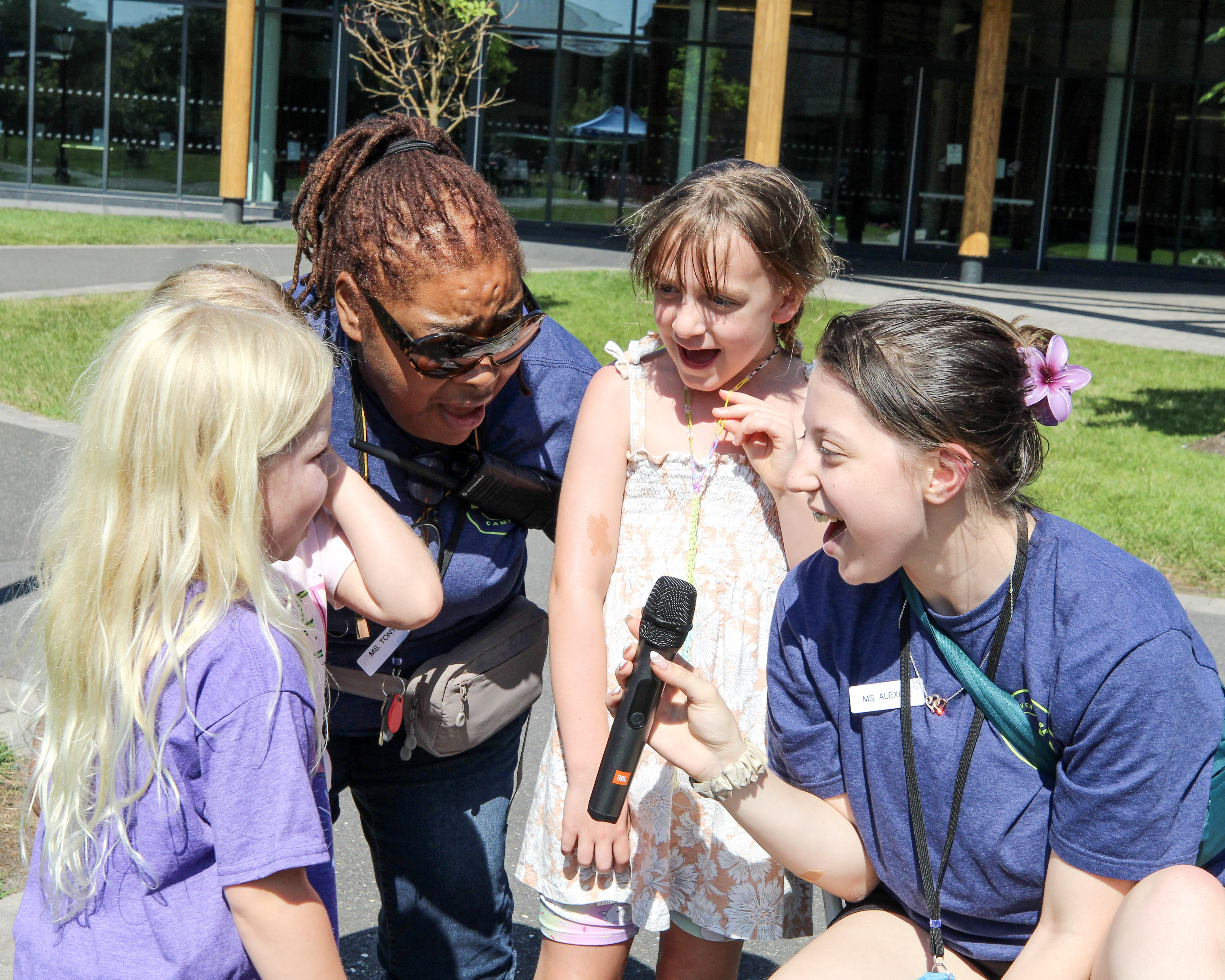
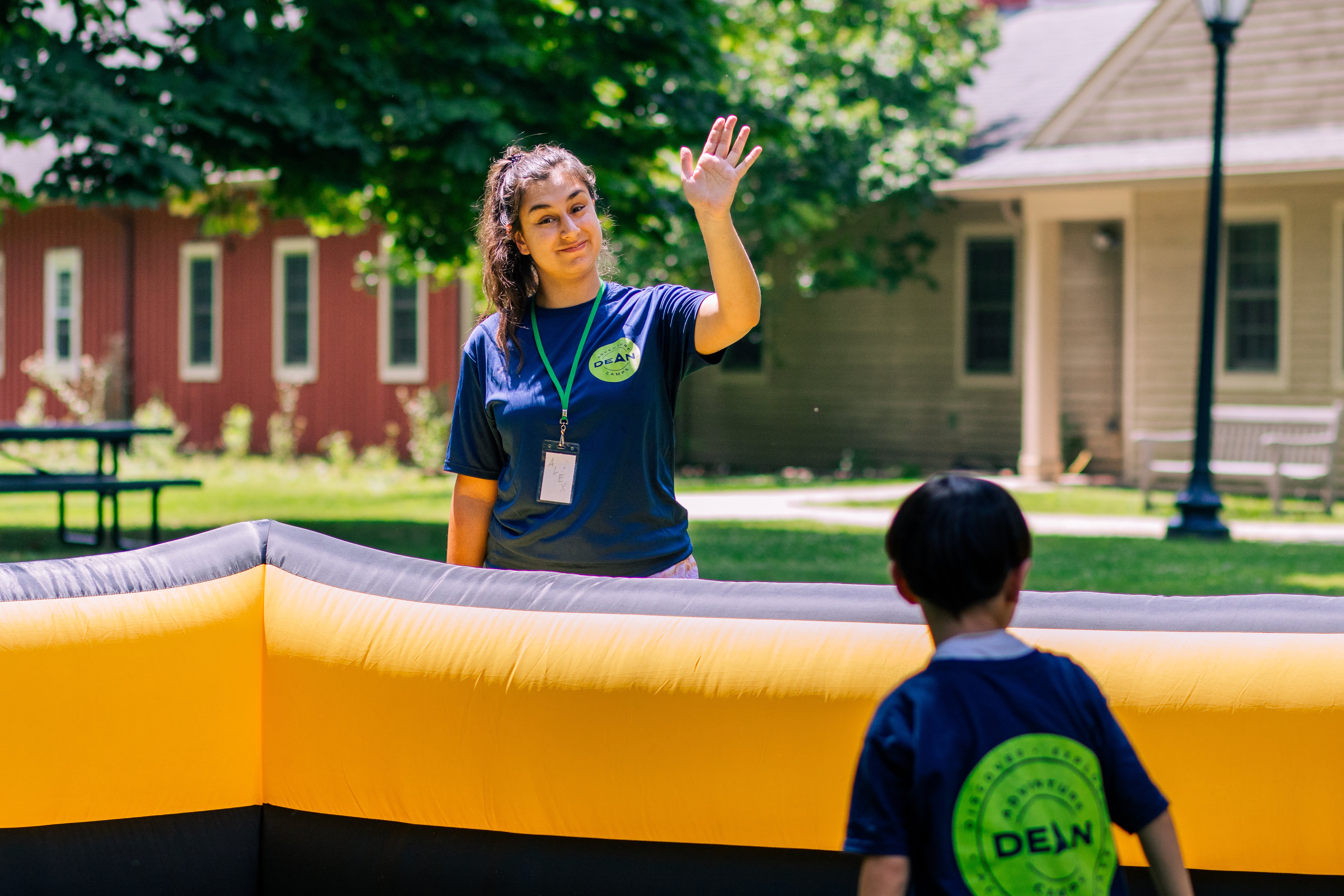
DEAN Adventure Camps at Haverford College sits minutes from Lower Merion and operates on exactly the model described above: distinct program tiers for each age group, running within a single full-day framework from 7:30 AM to 5:30 PM.
The tier structure works like this:
- Discoverers (Pre-K–K): A nurturing entry point with hands-on projects, play-based learning, and consistent counselor presence
- Explorers (Grades 1–2): Introduction to DEAN's specialty programs with more structured activity and skill-building
- Achievers (Grades 3–4): Deeper specialty focus across 30+ program options including Culinary Arts, Woodworking, Machine Sewing, and Innovation Lab
- Navigators (Grades 5–8): Complex, multi-session specialty programs with genuine skill development and peer-centered structure
Every Lead Counselor is First Aid and CPR certified. The counselor-to-camper ratio holds at 1:7 across all tiers. Hot breakfast, full lunch, and multiple snacks are included in the base rate. So are all materials, supplies, and the DEAN Welcome Pack each child receives on their first day.
The Grow with DEAN model is built specifically for multi-year, multi-child families: children enter the program at their age-appropriate tier and progress through the full pathway together, each on their own developmental track. For families with a kindergartener and a sixth grader both enrolled, every morning starts at the same place. Every afternoon ends there too.
We don't fill days. We shape them. And we do it for every child in the car.