 1 WEEK SESSIONS
 GRADES: RISING 1ST-4TH

SKILLS & TECHNIQUES
Each week, campers engage in hands-on projects, learning key skills and mindsets:
- Foundation Skills: Design thinking, engineering principles, and construction techniques through brainstorming, planning, and assembling.
- Technical Abilities: Safely operating age-appropriate tools while building focus, self-regulation, and responsibility.
Also, as they build and create, campers strengthen essential character skills:
- Collaboration: Working in teams to problem-solve and persevere through challenges.
- Resilience and Perseverance: Refining designs and sticking with bringing big ideas to life through trial and error.
By the end of each session, campers take home their finished creations, along with a new level of confidence, enhanced skills, and the mindset of a true innovator.
 GENERAL DAILY SCHEDULE


HOURS


SCIENCE SLEUTHS
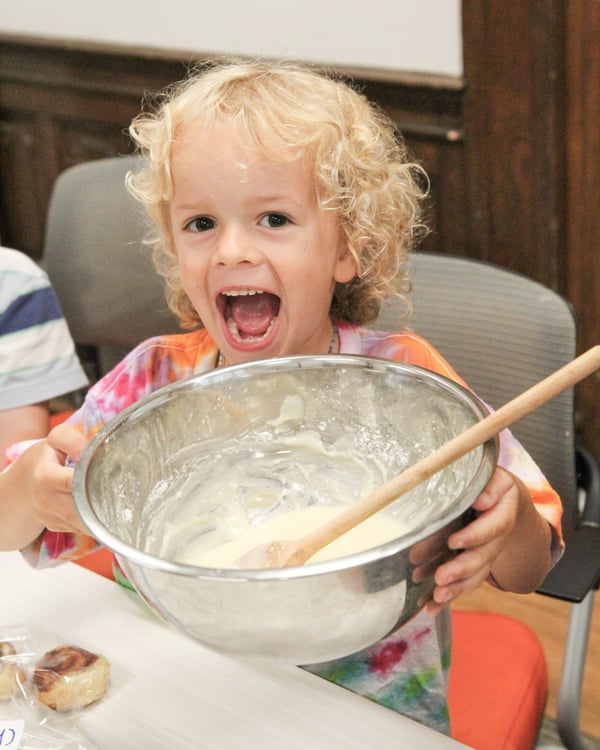
Get messy. Ask why. Crack the case. Campers become science sleuths called in to solve a mix-up at the DEAN Lab. Someone swapped the labels, spilled the jars, and left a trail of mystery powder across the floor. Three suspects were in the lab last night: Professor Fizzwell, Dr. Crumble, and lab intern Penny Potion.
To crack the whodunit case, sleuths test a new substance each day and follow the same steps real scientists use: predict, test, record, and explain why. Each result adds evidence to the case file, and every investigation rules a suspect in or out. The week ends at the camper showcase with an explosive final lab test and campers naming the culprit with scientifically backed evidence.
This hands-on STEAM program teaches the scientific method and basics of chemistry.
Explorers (rising grades 1-2) are guided each step of the way by counselors and work in pairs or small groups on short, focused tasks. They say or draw a prediction, watch what happens, and share what they noticed with their team. New campers learn the routine of predict, test, record, and adjust. Returning campers take on trickier challenges and help show newer campers what to do. Beyond STEAM, campers develop fine motor skills, hand-eye coordination, and attention to detail.
Achievers (rising grades 3-4) work more independently. They plan with their team, divide the jobs, and keep their own notebooks of measurements and results. They compare their attempts and explain why a test worked or didn’t before adjusting. New campers learn the full routine with coaching from counselors. Returning campers lead team steps and take on the week's hardest challenges.
SPACE STATION RESCUE
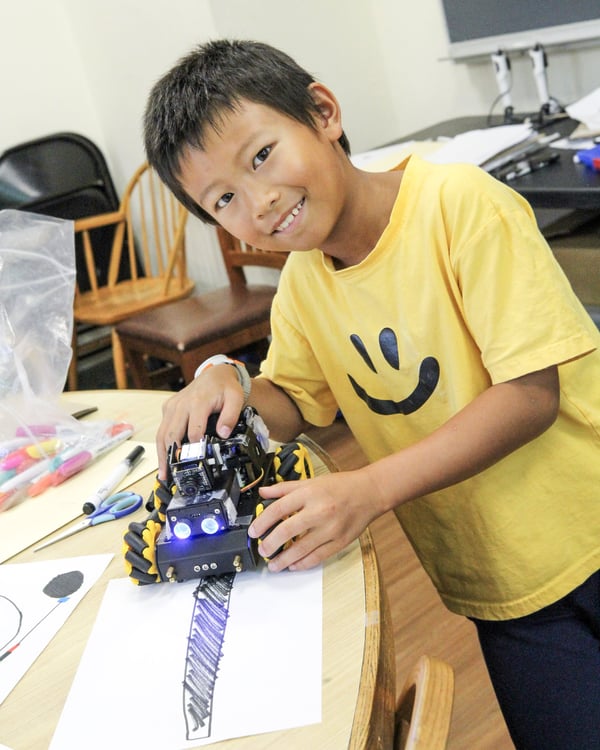
The Case of the Runaway Rover. Campers become astronauts aboard Space Station Orbit-7, and the alarm is sounding. Moon rocks drift across the lab, the cargo lift is jammed, and the rover drives off. Something has thrown the station’s forces out of balance. The crew must find the cause and fix it fast.
To get the station running again, astronauts need to figure out how to steer the drifting moon rocks with pushes and pulls, free the cargo lift with levers and pulleys, and catch the rover by calculating its speed and building ramps to block its path. Every repair unlocks a clue and a new tool for their astronaut kit. As the clues add up, the team gets closer to tracing the trouble to its source.
This hands-on STEAM program teaches the physics and engineering behind real machines like cranes, elevators, and Mars rovers, all through a space mystery.
Explorers (rising grades 1-2) are guided each step of the way by counselors and work in pairs or small groups on short, focused tasks. They say or draw a prediction, watch what happens, and share what they noticed with their team. New campers learn the routine of predict, test, record, and adjust. Returning campers take on trickier challenges and help show newer campers what to do. Beyond STEAM, campers develop fine motor skills, hand-eye coordination, and attention to detail.
Achievers (rising grades 3-4) work more independently. They plan with their team, divide the jobs, and keep their own notebooks of measurements and results. They compare their attempts and explain why a test worked or didn’t before adjusting. New campers learn the full routine with coaching from counselors. Returning campers lead team steps and take on the week's hardest challenges.
THE LOST TREASURE OF CORAL ISLAND
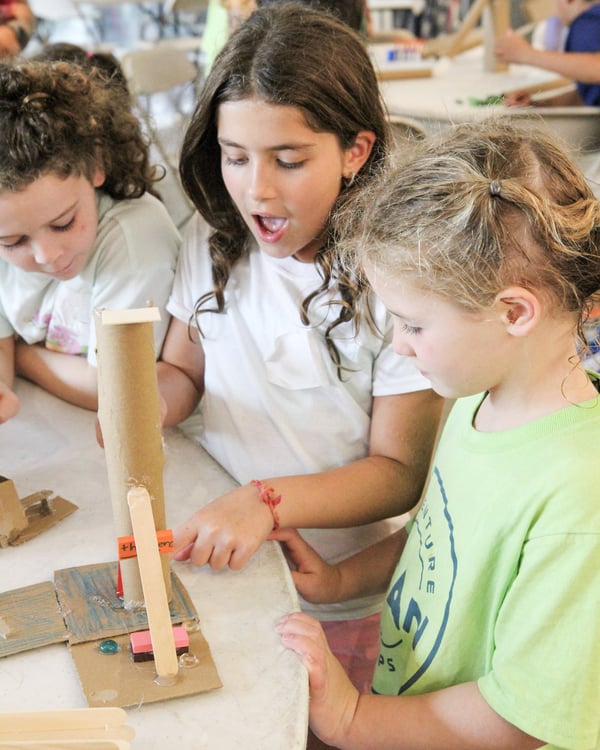
Legend says the gold is still there. Campers become treasure hunters searching Coral Island for Captain Silverhook’s lost gold. The old pirate hid it deep inside a sea cave beneath a dormant volcano that is now waking up. The rumbles from below of the impending eruption have blocked the path. The lookout tower topples, the dock sinks into the sand, and the only crossing has crumbled into the sea.
To clear the way, campers test why triangles and arches hold weight, how a wide base stops a wobble, how to build for shaking ground, and how to sketch a plan first. Each solved repair earns a piece of the captain’s torn map. Then comes the biggest challenge: a new bridge strong enough to carry the heavy chest, steady in ocean gales, and solid when the volcano starts to rumble. The week ends with campers crossing safely, claiming the chest, and presenting their designs at a camper showcase.
This hands-on STEAM program teaches the engineering and architecture behind real structures like the pyramids and the Golden Gate Bridge, all through a treasure hunt.
Explorers (rising grades 1-2) are guided each step of the way by counselors and work in pairs or small groups on short, focused tasks. They say or draw a prediction, watch what happens, and share what they noticed with their team. New campers learn the routine of predict, test, record, and adjust. Returning campers take on trickier challenges and help show newer campers what to do. Beyond STEAM, campers develop fine motor skills, hand-eye coordination, and attention to detail.
Achievers (rising grades 3-4) work more independently. They plan with their team, divide the jobs, and keep their own notebooks of measurements and results. They compare their attempts and explain why a test worked or didn’t before adjusting. New campers learn the full routine with coaching from counselors. Returning campers lead team steps and take on the week's hardest challenges.

Passport to YUM


the world of sweet imagination

is it cake?
DEAN Camps - Premium summer day camps serving Haverford, PA (Main Line/Philadelphia area) and Lawrenceville, NJ (greater Princeton). Specialty programs for ages 4-16 include woodworking, machine sewing, culinary arts, STEAM, performing arts, design & style, writing & illustration, sports & games, and Trailblazers, plus CIT leadership development. Full-day care with breakfast, lunch, and snacks included. Serving families from Bryn Mawr, Ardmore, Radnor, Princeton, Hopewell, and surrounding communities since 2001. Call 610-660-9600.