Parents ask a version of the same question every spring: will this camp actually help my child socially, or will it just keep them busy for eight weeks? It's a fair question. Not every activity builds social skills the same way, and not every camp structures its day to make that growth possible.
Summer camp social skills development happens through specific, repeated moments: a child asking a peer for help, waiting a turn, giving feedback that stings a little, or figuring out how to include someone who's struggling to fit in. The activities that create those moments matter as much as the camp itself. Here are eight that do it consistently, and why they work.
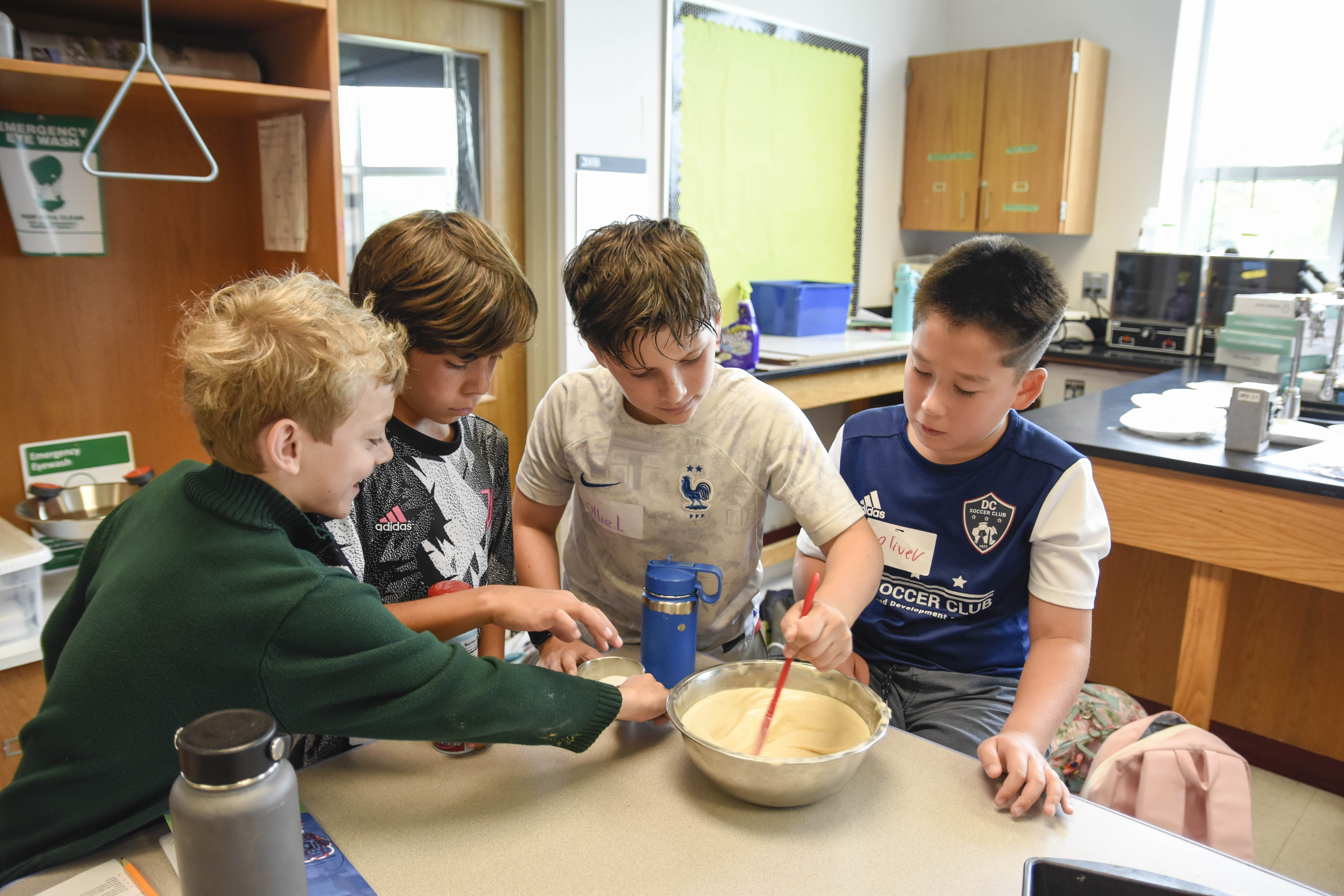
1. Culinary Arts Sessions Teach Kids to Coordinate in Real Time
A culinary session rarely has one child doing everything. One camper measures, another mixes, a third plates the finished dish. That division of labor forces communication that doesn't happen naturally when kids are working alone: who's doing what next, whether the batter looks right, what happens if someone falls behind.
Younger campers practice basic turn-taking and sharing tools. Older campers start negotiating roles and troubleshooting together when a recipe doesn't go as planned. Either way, the lesson is the same: the group succeeds or struggles together, and that shared stake changes how kids talk to each other.
2. Woodworking Projects Build Patience and Honest Feedback
Woodworking runs on a slower clock than most camp activities. A birdhouse or a soapbox derby car takes days, not minutes, and that timeline teaches something team sports and quick games can't: how to stay patient with a peer who's still learning a skill you've already mastered, and how to ask for help without embarrassment when your own cut goes crooked.
Campers also learn to give feedback that's useful rather than just kind. Telling a friend their joint won't hold, in a way that helps rather than discourages, is a genuinely hard social skill. DEAN's Woodworking Camp builds in that kind of peer collaboration by design, with campers sharing tools, workspace, and ideas throughout the week.
3. Robotics and Innovation Challenges Turn Problem-Solving Into a Group Sport
Give a group of kids an open-ended building challenge, like a Rube Goldberg machine or a robot that has to complete a task, and you'll watch social dynamics play out fast. Someone wants to lead. Someone else has a better idea and has to find the nerve to say so. The group has to decide, together, when to keep troubleshooting and when to try something new.
Research on cooperative play backs up what shows up in these sessions. A study on preschoolers published through the National Institutes of Health's PMC repository found that children who played a game cooperatively were more likely to share afterward than children who played the same game competitively, suggesting that the structure of an activity, not just its content, shapes how kids treat each other. Camp challenges that require a shared outcome, rather than a winner, build that same instinct. DEAN's Innovation Lab is built around exactly this kind of collaborative, open-ended problem-solving.
4. Performing Arts Rehearsals Build Confidence in Front of Others
Getting on stage, even for a short skit at a Friday showcase, requires a kind of social courage that's hard to practice anywhere else. Campers have to trust their scene partners, take direction without taking it personally, and recover gracefully when something doesn't go as rehearsed.
Group performance work also teaches something subtler: how to read an audience and adjust. A joke that doesn't land, a scene that runs long, a costume malfunction. Kids learn to respond to real-time social feedback instead of just following a script. DEAN's Performing Arts programs scale this by age, from playful improvisation for younger campers to full ensemble collaboration for Navigators.
5. Team-Based Outdoor Activities Build Trust Between Campers
Physical group activities, whether it's an obstacle course, a relay, or a pickup game, put trust and encouragement on display immediately. A camper who cheers on a slower teammate instead of getting frustrated is practicing a skill that outlasts summer. The American Academy of Pediatrics has noted that when organized sports and physical activities are structured around inclusion and enjoyment rather than pure competition, the camaraderie and teamwork required tend to translate into skills kids carry into everyday life. That's the version of team play worth looking for in a camp day.
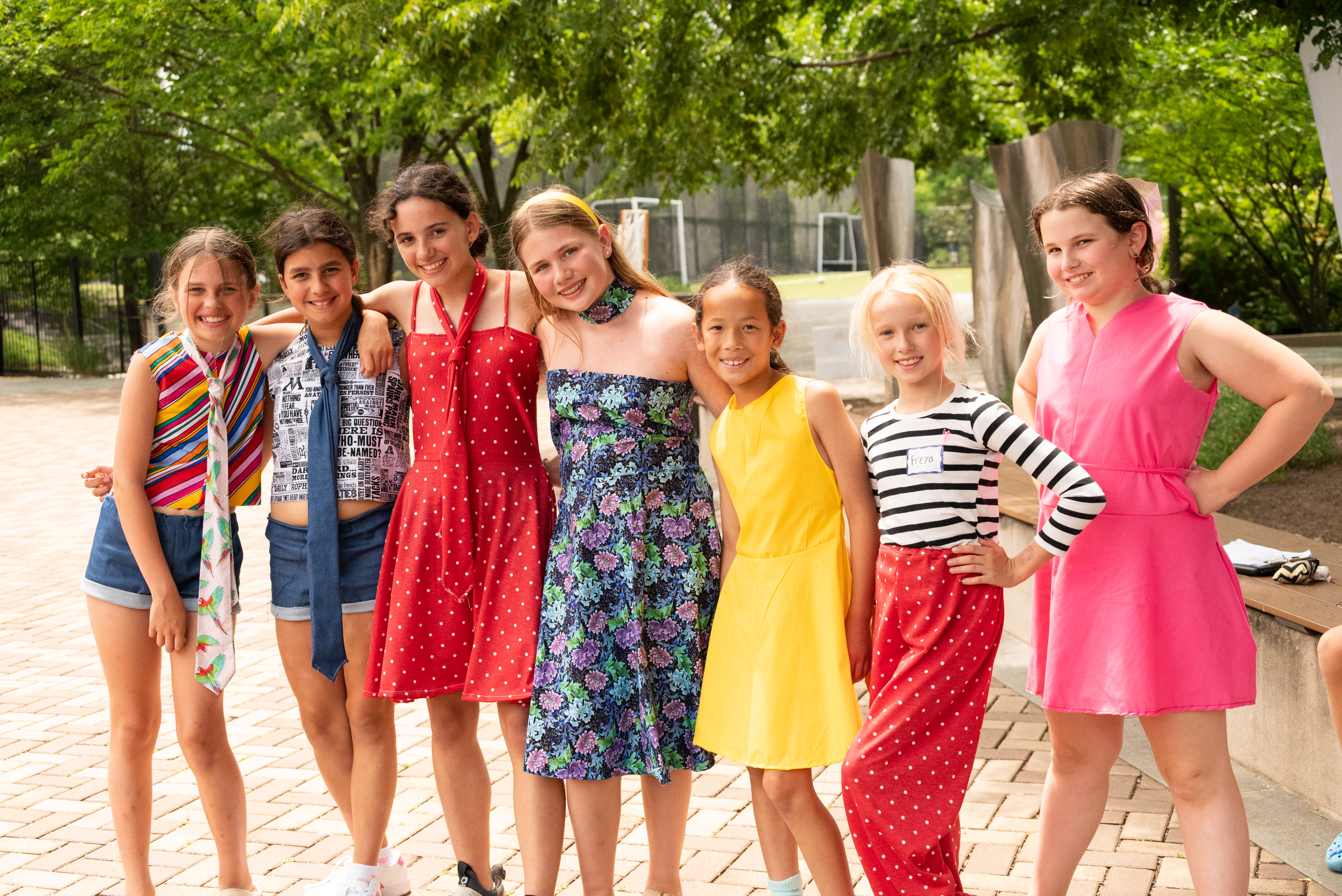
6. Machine Sewing Projects Teach Kids to Help Without Taking Over
Sewing is a skill most campers are learning for the first time, which levels the playing field in a useful way. Nobody walks in already good at it. That shared starting point makes it easier for kids to ask each other for help and easier for a faster learner to assist a struggling peer without making it feel like charity.
The finished product matters too. A camper who sews their own project, start to finish, has something tangible to talk about with the rest of the group, which gives quieter kids a natural way into conversation.
7. Small-Group Games Teach Kids to Include Everyone
Not every social skill needs a specialty program to develop. Simple group games, tag variations, cooperative challenges, name games during free time, teach some of the most basic and important lessons: how to notice when someone's left out, how to invite a new camper into an existing group, and how to lose without falling apart.
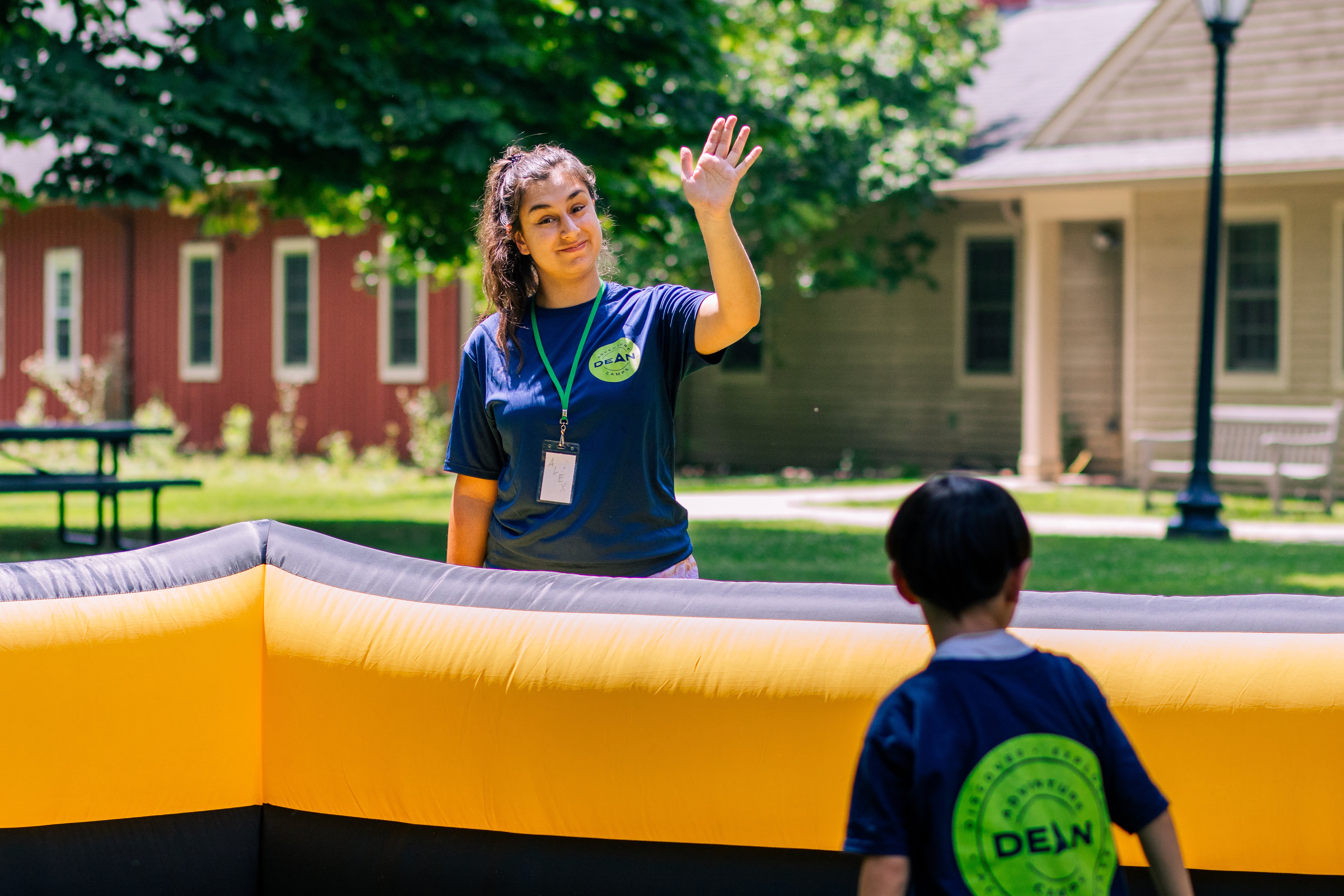
These moments matter most in the first week of camp, when friend groups haven't formed yet. A counselor who steps in at the right moment, without taking over, helps a shy camper find an opening. That's part of why counselor attentiveness matters as much as the activity itself. At a 1:7 ratio, counselors can actually see these small moments happening and guide them, rather than just supervising from a distance. DEAN's post on the mechanisms behind camp-driven social growth goes deeper into how ratio and structure combine to make this possible.
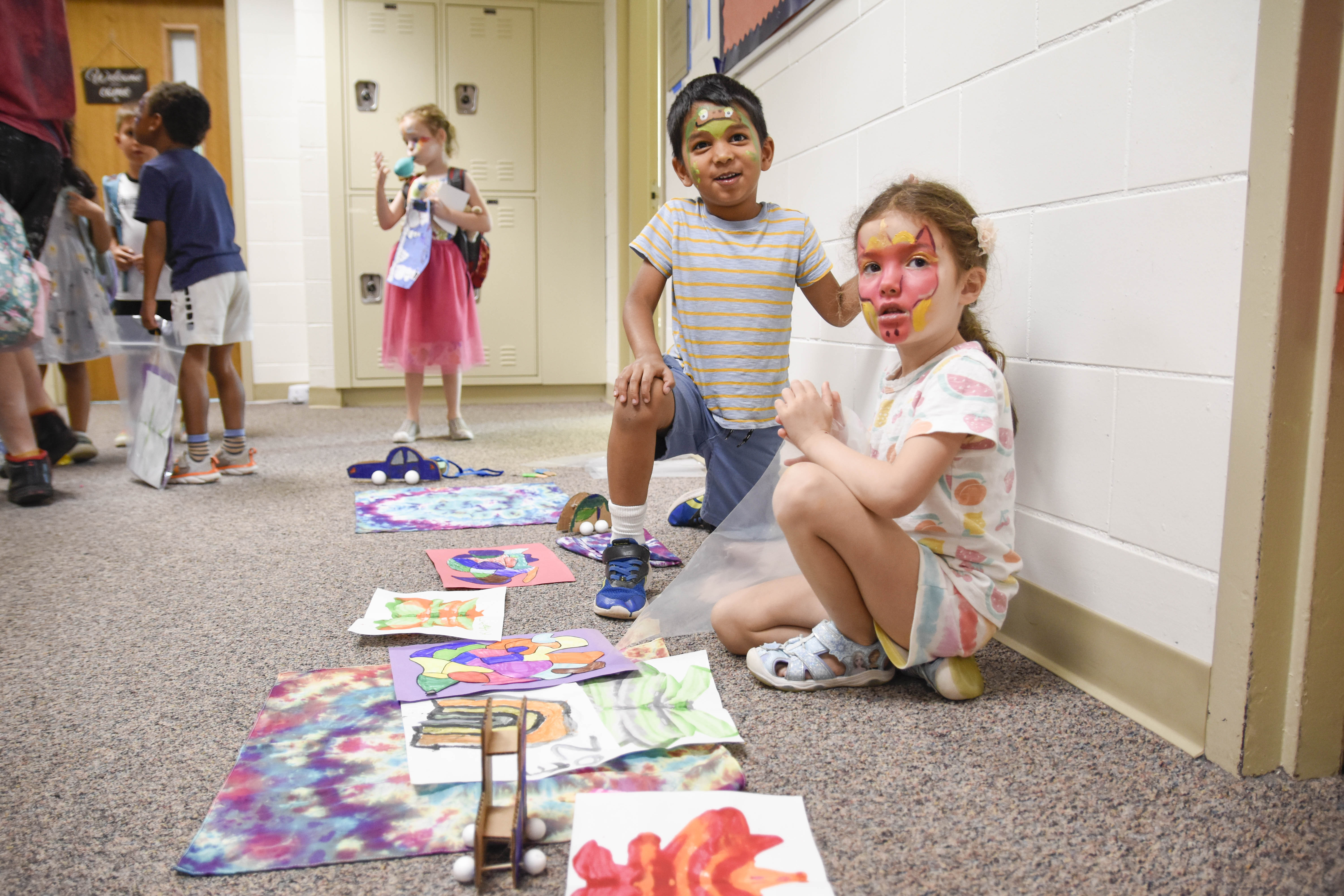
8. Mixed-Age Showcases and Friday Presentations Teach Kids to Support Each Other
Many DEAN specialty programs end the week with a showcase: campers present a finished project, a performance, or a completed dish to parents and peers. These moments teach something that's easy to overlook: how to celebrate someone else's work without comparing it to your own, and how to accept recognition without needing to be the center of attention.
Presentation days also build a lower-stakes form of public speaking. A camper explaining how they built a soapbox car, or why they chose a particular fabric for a sewing project, practices articulating their own thinking to a group. That skill compounds. For a broader look at how these individual moments add up across a full summer, DEAN's roundup of the social skills kids build at camp covers the full picture.
What Ties These Activities Together
None of these activities builds social skills automatically. A woodworking project supervised loosely can be eight kids working in silence next to each other. A performance rehearsal without real coaching can be a missed opportunity instead of a confidence builder. The difference comes down to structure and attention: activities designed for genuine collaboration, run by counselors who notice when a child needs a nudge to join in or a moment to shine.
That's the thinking behind DEAN's approach to specialty programming. Thirty-plus hands-on programs, a 1:7 counselor-to-camper ratio, and a day that runs from 7:30 AM to 5:30 PM give kids the time and structure to build friendships the slow way, through shared work rather than forced icebreakers. Every counselor knows your child's name, and every activity is built around making something real alongside other people. That's what turns a summer of activities into a summer that builds something lasting.