

4 min read
Which STEM Summer Camps in the United States Mix Robotics With Woodworking and Arts?
DEAN Team : Oct 15, 2026, 8:30:00 AM
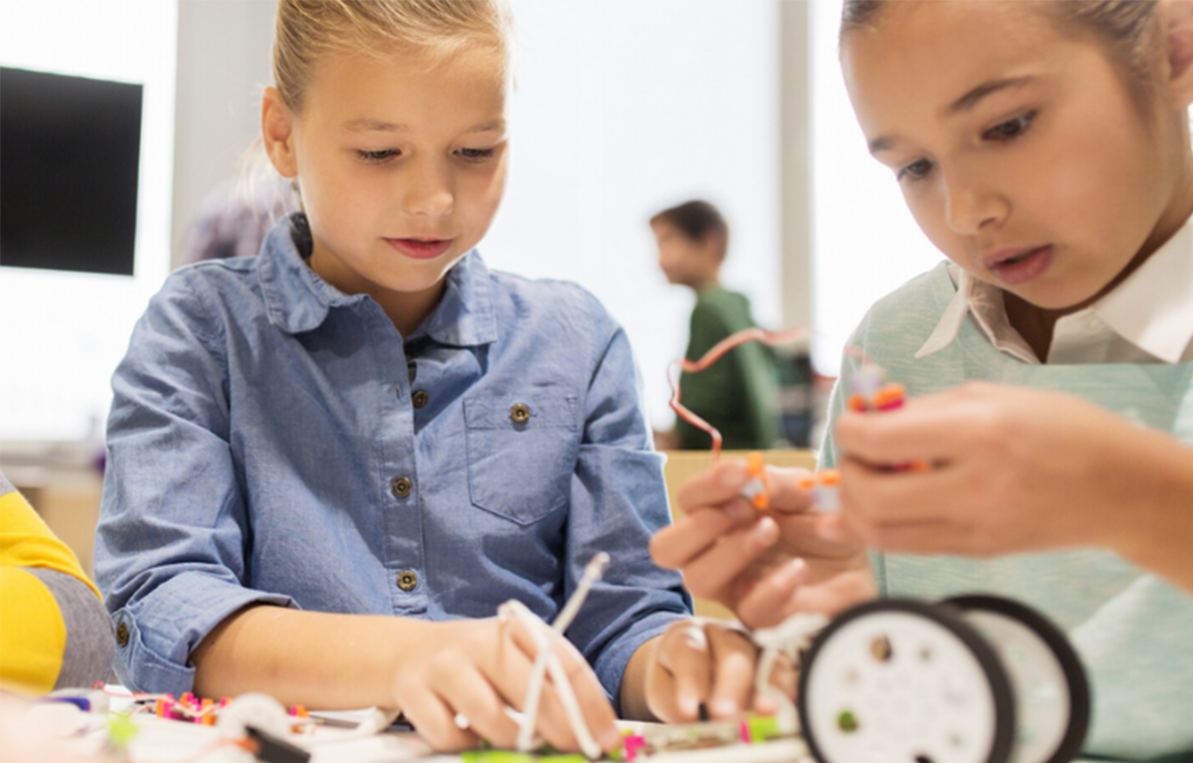
STEM summer camps that combine robotics, woodworking, and the arts in one program are uncommon in the United States. Specialty camps tend to pick one lane, so robotics camps run on laptops and plastic kits while woodshop and art camps keep kids at the workbench or the easel. The programs that blend all three usually describe themselves as STEAM or maker camps, and you'll find them inside multi-specialty day camps where coding, building, and design happen in the same room during the same week.
For families, the search for STEM camps for young children has a second layer. A program built for middle schoolers with power tools would overwhelm a six-year-old holding a hand drill for the first time, so the right fit depends on how a camp scales its tools, projects, and supervision to your child's age.
Robotics, Woodworking, and Art in One STEAM Summer Camp
Combining the three subjects gives young kids more ways into the same problem. A child who loses interest in programming a robot's path often re-engages when the job becomes building the ramp it drives down, or painting the cardboard city it drives through. The same engineering thinking applies to each material.
Research supports starting early. A Young Children article from NAEYC reports that young children can make observations, test predictions, and use engineering habits of mind such as systems thinking, collaboration, and supported persistence during play.
Art adds a creative layer to engineering play. In a quasi-experimental study of a project-based STEAM program, elementary students showed significant gains in creativity over six weeks compared with a control group, and their science knowledge stayed on par.
Three Types of STEM Summer Camps Families Will Find
When you start comparing programs, you'll see three broad formats. Each suits a different child, and only the third reliably mixes all three disciplines.
- Tech-focused robotics and coding camps. Kit-based robots and a screen at every station are standard, and the focus stays on programming. They suit kids who already know they love code. Hands-on building with wood or art materials is usually limited.
- Art studios and maker workshops. Strong on materials, color, and self-expression, these programs give kids plenty of time with paint, clay, fabric, or scrap wood. Structured engineering challenges and programmable robots are less common.
- Multi-specialty STEAM day camps. Several specialty programs run under one roof, and disciplines blend inside individual weeks. Expect the widest range of tools and plenty of room for a young child to try several things in one summer. The specialty day camp model also keeps kids engaged into July and August, since each week brings a new project.
Age-Appropriate Tools and Projects for Young STEAM Campers
A five- or six-year-old needs a different setup than a seventh grader, even in a program with the same name. Look for these markers when you read program descriptions or talk with a director.
- Tools sized for small hands. Hand tools like pull saws, egg beater drills, and block planes let early elementary builders work with wood safely; power tools belong in older age groups.
- Short build-and-test cycles. Young kids learn engineering by trying something, watching it fail, and adjusting. A day organized around quick iterations keeps them engaged longer than one long build.
- Mixed materials in the same project. Cardboard, wood, gears, wheels, and art supplies used together let a child solve one problem several ways.
- Robots that move off the screen. Early coding works best when children can watch a robot respond to their instructions on the table in front of them.
- A finished piece to bring home. Young kids want proof of what they made. A Friday showcase or take-home project gives them a reason to finish.
- Close adult support. Counselors should coach a frustrated child toward the next attempt and leave the fixing to the child.
At DEAN, the Innovation Lab program puts those markers into practice for campers entering first and second grade. Explorers design simple chain-reaction machines, code robots to complete challenges, and build structures from cardboard, wood, gears, wheels, and 3D pens, then present their work at a Friday showcase.
Questions to Ask About a STEM Summer Camp's Daily Schedule
Program descriptions list projects. To see how kids spend their hours, ask a camp director to describe a typical day and listen for a few specifics.
- How many hours of hands-on building happen each day, and how much screen time the robotics portion involves.
- Whether younger and older campers share tools, or whether each age group has its own equipment and projects.
- The counselor-to-camper ratio during tool use, plus the safety certifications lead staff hold.
- What happens before and after the core program, and whether early drop-off, late pickup, meals, or materials cost extra.
DEAN's STEAM, Robotics, and Woodworking Camps in Haverford and Lawrenceville
For families near the Main Line and Princeton, DEAN Adventure Camps offers robotics, woodworking, and art inside the same summer. Our 30+ specialty programs run at Haverford College and The Lawrenceville School in one-week sessions, so a child can spend one week coding robots and the next at the workbench.
- Innovation Lab Explorers (entering 1st and 2nd grade) blends coding, robotics, engineering, and art in daily projects.
- Innovation Lab Achievers (entering 3rd and 4th grade) adds gears and motors, circuits and LED lights, and creative coding to the mix.
- Woodworking (entering 3rd grade and up) teaches measuring, sawing, drilling, and sanding with age-appropriate hand tools, through projects like birdhouses, model sailboats, and soapbox derby cars.
Every day runs from 7:30 AM to 5:30 PM at one flat rate, with hot breakfast, lunch, snacks, and all materials included. A 1:7 counselor-to-camper ratio means every counselor knows your child's name, and all Lead Counselors are First Aid and CPR certified. Confidence through doing is the goal of every project, whether it ends as a coded robot or a sanded birdhouse.
Families with preschoolers can start in the Discoverers program and grow with DEAN from there, adding new tools and harder builds each year. A first grader who codes robots in Innovation Lab can be sanding a soapbox derby car in Woodworking two summers later, and that progression is the summer that builds something lasting.